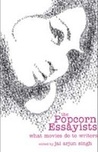
by Jai Arjun Singh My rating: 3 of 5 stars Another fine book from Tranquebar, this collection, edited by Jai Arjun Singh, has thirteen specially commissioned pieces on films of various genres, from diverse places and dealing with this or that aspect of films. The first story, Jellyfish by Manjula Padmanabhan, sort of rambles on comfortably, basically sharing her experiences, meeting film buffs and having to watch the sort of arty farty films which grace some auditoria in Delhi, for example. She's used a format which makes it come alive, using dates, conversation and interspersing a "cut to" here and a "dissolve" there. Manil Suri's My Life as a Cabaret Dancer is one of my favourites not only because of the entertaining content but also beacuse he writes well - I look forwards to reading his novels. He's an amazing man - a mathematician and novelist. The second article I enjoyed immensely is Musharraf Ali Farooqi's The Foot-Worshipper's Guide to Watching Maula Jatt, written with much tongue in cheek. He analyses what sounds like a B Grade film with a very serious tone-almost like Stephen Leacock. Terminal Case by Sidin Vadukut was also amusing-a look at an Indian family in Dubai in the VHS tape days, the author's first film in a hall, seeing a Malayalam film in Kerala with extended family, and various other escapades related to the viewing of films. With classy cover, The Popcorn Essayists can work as a coffee table book. Given the diversity of voices, it's not only movie buffs who'd love to have a copy-another fine book for an anytime present to anyone-so long as they love to read! View all my reviews
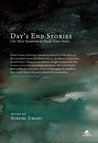
I judged this Tranquebar edition by its cover. I love it. Ahlawat Ghunjan’s art work brings to light the shades and spaces of night. The subdued glimpses of a water body and of stars suggest twilight in a small town. I presume that it is also his art which forms a prelude to each article.
Each article wraps up with a some neatly presented information about the town-regular or seasonal events like theater, cinema halls, book stores, malls...which also makes this book a handy buy if you're visiting one of those small towns.
While some of the narratives in Subhi Jiwani's anthology on Life After Sundown in Small-Town India make for slow reading, are rather academic in tone, others wax lyrical. A fine blend of information and gossip characterises most of the pieces.
Reading this shortly after Urban Shots: Bright Lights made perfect sense. Fiction about the metros followed by real life accounts of night life in small towns.
Night, in a small town in India, is closed to women. Dogs, booze, pot and power cuts are some of the other elements common to these towns.
My favourites in this collection are The World Came to Town and Dharini Bhaskar's A Country of Words. The focus of the first is the screening of international films in a small town in Kerala. Not only did I get a glimpse of the stories of two Kurosawa films, but was also enchanted by the author’s insight into some of the aspects of life in Kerala-how women fare and how arty farty the Left can get.
Bhasker’s piece is poetic - from descriptions of leaving Delhi on a bus to MacLeod Ganj (“Delhi appears in jump cuts, as fragments, a potholed road, a smokehued building, and always the startandstop of angry rushhour traffic”.), through the eventful journey (“Before me rests a finely woven sheet of mist”.), to the town (“It’s 9 pm, and it is stirring with tales of the night”.). I look forwards to reading more of her writings.
I looked forwards to ‘Monsieur, Keen on Rajnikanth?’, as I lived in Pondicherry long ago. It was a nice read, with a subtle melange of gossip and information. In Bihari Nights, Amitava Kumar captures the essence of the enterprise straightaway: “The inhabitants of Bettiah are satisfied, especially during summer,if the power supply revives for a few hours every three days.”
We glimpse the reality of Bihar of which we have only heard rumours: the abductions, thefts...The atmosphere of fear, the division of Hindu and Muslim-these things are echoed in some other voices in the anthology. As are films. A film is or was a big event in small towns. And some of these authors also speak of the X-rated films in the noon shows.
However, Amitava devotes a lot of pages to Naipaul. I fully sympathise and empathise with Naipaul bashing but that’s my pet bias. Mr. Kumar juxtaposes what Naipaul saw (and smelled) with the virtues of people he meets in real time, and people he’s told about, particularly touching in an anecdote about the degree of interpersonal trust in small towns. And he has skillfully balanced this with all his tales of dacoity.
Food is present in most of the writings and Amitava doesn’t linger on it, unlike Akshay Pathak in Escaping Home and Returning. The latter will have any Indian, if not anyone else, drooling with his descriptions of things to eat in Bikaner.
Theater plays a part in some of the stories. Amitava attends a play by Girish Karnad staged in Bihar, a play about caste and caste has a major role in these diverse narratives too-as both the Hindu-Muslim divide and the caste lines are cast in iron in small towns.
But, lest we assume that this anthology is a morose look at evil hilly billies, note that there is frequent reference to change. Mr. Kumar speaks of women cops in Bihar - and that too at night.
I was eager to read Tabish Khair as I’ve added him on FaceBook but must admit that his In The Bigness of Small Towns is a little pedantic. Very enlightening, of course, and I love how he’s woven Kolatkar’s Jejuri into the narration. It’s a most valuable essay. He talks of the literary geography of India and traces the transition of the setting of writings from R. K. Narayan’s times through the Shashi Deshpande era down to Rushdie’s rushing us into the urban milieu.
For some no small reason, Tibetans figure in several of the works. These exiles were homed in many remote locations in India and, though their angst is well represented, we see that many can call India home (according to the Indian Citizenship act, Tibetans born in India between 26 January, 1950 and 1 July, 1987 automatically qualify for citizenship). Mr. Khair mentions them in terms of the “excitement” in the “other” that characterises the small town in contrast to the urban situation where the “other” rubs shoulders with us all the time.
Taran N Khan’sLittle Women, Fewer Men is a demure and simpering memoir of life as a girl in Aligarh. It smacks of a school essay but is, nevertheless, charming in its own way.
Following directly after, Kynpham Sing Nongkynrih’sSeeking the Spirit of Night, is also a bit school boyish. However, it’s innocence is alluring as is its informativeness. Shillong, though a popular tourist spot, is one of those parts of India that we Indians don’t know much about. Mr. Kynpham Sing Nongkynrih also tells us about theater in Shillong and about booze and pot and how women cannot favour night outside as do the boys and men.
Ms Bhaskar’s A Country of Words and Akshay Pathak’sEscaping Home, and Returning are, perhaps, the most entertaining of the lot. Very readable. Pathak has dogs, booze (‘child beer’), pot, and the situation of Muslims all covered. His is a delicious piece, not only because of the famous cuisine of Bikaner, but because he writes so well.
Crossing Lines by Zahir Janmohamed is a rich and resonating article. And painful to read. If the other Muslim authors in this collection have chosen to be bland about the truth of life as a Muslim in India, and very understandable that would be, he’s stripped all sham. I salute him. Oh, and there’s plenty of booze in his byeline. He’s crossed a lot of lines.
I’m sorry to say that, apart from Ms. Bhaskar, the other two women writers disappoint. Sumana Roy’s Raat Ki Rani ought to be thrilling as she spends a lot of time with women who smuggle goods across the border on their bodies. It ought at least to make one cringe. It does neither. It almost does nothing. There’s something rather middle class and whiny in her tone.
So, from the fine introduction by Subhi Jiwani to the bios of the writers on the concluding pages, Day's End Stories: Life After Sundown in Small-Town India is a must buy.
Some months back, I saw the animated film of Joann Sfar's graphic story. So, it was a thrill to get my hands on the BD.
This is a story, I can safely tell you, where a very cynical, rather cruel, and very canny cat acquires the gift of speech. This cat happens to belong to a Rabbi. And, with the advent of speech, it proceeds to argue over various aspects of the religion, mostly with its master, but also with his master and so on. The ideas, while set in the framework of Judaism, are applicable to all religions. Be it the art, where the nature of people, of the cat, is deftly brought out in a raw style or the sophisticated theological debates, the book is well worth reading if you are a fan of the graphic novel or love a touch of dark humour. The drawings are very evocative and provocative. How you like them will depend on your tastes. One reviewer praises the artwork
as rich and lovely as the story, full of squiggly lines, tapestried walls, cobbled alleyways, opulent costumes and palpably warm lighting
mangy and unkempt as the cat, with contorted figures and scribbly lines everywhere.
On the last page of the BD, we read that this album is homage to all the painters of Algeria in the XXth century. You can get a clearer picture about the author and the story from this review. I would hesitate to add more lest I let the cat out of the bag but, if you are into graphic novels, then you should buy The Rabbi's Cat. A glimpse of the master's art:
 by Jai Arjun Singh