Sunday, July 24, 2016

Jo Nesbo's The Bat - A Scandinavian Detective Down Under

My third Nordic detective novel, Jo Nesbo’s The Bat, has not really upped my fondness for the breed. And yet I seem to pick them out of the multitude of crime fiction writers splattering the genre these days.

The Bat (Harry Hole, #1)

I guess I picked this one out by deciding between a Nesbo set in Bangkok and one in Australia. I was so tempted by a Nordic take on Thai but knew I’d end up being disgusted and angry at the stereotypical European take on Thailand. I thought I’d be safe with what ought to have been a White on White case.

Alas! After heartburn over Henning Mankell’s insistence on colouring his stories with Chinese and Africans, I ought to have known better. Detective Harry Hole has to be teamed up with an Aboriginal!  

It’s not as if the Australian police force has them in significant numbers. It seems to be, basically, so that yet another Scandinavian wants to leave us, people of colour, scandalised. The Aboriginal Andrew is no Arthur W. Upfield Bony Novels .

He doesn’t show any great skills of any kind, is a bit flashy and appears to have been interpolated solely to add colour to the story. And to stain the reader’s views of people of colour.  

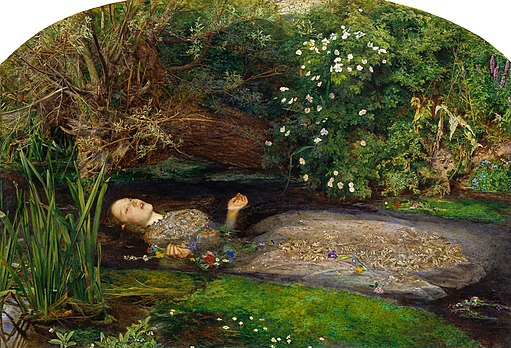
My usual bile apart, I have a feeling that the author’s favourite painting is the famous one of Ophelia's death by drowning.

John Everett Millais - Ophelia - Google Art Project

In the meantime, thanks to researching for this review I find a new mode of book review on YouTube and there are many for the Nesbo books.

While below is a review for an upcoming film based on one of his books


there are others which are more entertaining


and, while those were trailers for screen versions, here's a book review too!


You might want to pick up a copy to check it out for yourself- after all Nordic crime mysteries are in vogue!

Friday, July 22, 2016

Monsooned Reading - Rider Haggard - Adventure, Fantasy And Romance Through Colonial Eyes


Monsooning was a process to which coffee was subjected in the olden days. Coffee was transported from colonised countries to the Empire on ships and were at the mercy of the elements during that transit.

I wonder if that is what defines how instant coffee tastes...And why it is nothing like Filter Coffee.

And would it be thus that the White man's vision, of these lands over which he thought he had overlordship, weathered what he beheld?

It does no one any good to ban or criticise things, especially writings. Each form and its content brings to life a unique and wonderful vision.


It is true, though, that these perceptions have long governed us, whether we're from the ex-colonised world or from the countries which exercised this right to plunder. For example, how Indians continue to perceive Africans or the Chinese is largely shaped by this kind of output. Yet, time passes. The young from all over the world are busy interacting and discovering each other, thanks to the Internet and travel and study.

Removing or hiding things selectively is not at all a good idea! 

Haggard's King Solomon's Mines is a book that suits rainy weather well, full of rugged adventure, narrated in what would now be a quaint and charming style! 

What a charming tale this is and I assure you that, even today, few would be able to resist getting sucked into Haggard's world of greed, "exotic" places, magic, mystery, beautiful women, love and betrayal!

I'll admit that I'm not sure whether I've seen any version of the movie but I'll bet they would be entertaining! 


“It is a hard thing when one has shot sixty-five lions or more, as I have in the course of my life, that the sixty-sixth should chew your leg like a quid of tobacco. It breaks the routine of the thing, and putting other considerations aside, I am an orderly man and don't like that. This is by the way.”
H. Rider Haggard, King Solomon's Mines

Rider Haggard also wrote the marvellous and chilling and gripping She.

She


"She" seems to have given academics and psychologists a run for their money! And this is surely at least one more good reason why you should rush to get yourself a copy. Freud and Jung appear, both, to have had something to say about the character.


Freud's fascination with H. Rider Haggard, and in particular with She, seems to have been of long duration.
 She, or Ayesha, was a powerful image of a woman. C.G. Jung saw her as the personification of his Anima theory.  

For both stories there seem to be many film versions! Enjoy the sultry Ursula Andress in the clip below!


Wednesday, July 20, 2016

Strange Shores - How To Write A Baffling Tale


Write about a cold case. Throw in the soupcon of spooky. Stir in ladlefuls of snowy landscapes. Dig open coffins on a cold and dark night. Muddle an inner world with the outer. Slap on some random closure when three fourths done. Leave the reader to trudge through the icy sludge of a Nordic imagination where every name rings a Thor and Odin bell. Clear as ditchwater?
My first Arnaldur Indriðason has not been very promising. Perhaps that’s what comes of picking up the last book in a series for that is what this is supposed to be.


Bleak landscapes can make for a plodding read when the author is not quite sure what he means to convey. You squint along the pages, shading your eyes from the blinding glare of mystery. Not one but two. And all the time you’re hauled from out a very cold place to infernos of human passions.


Somehow the vile crimes and the torrid emotions that form the molten core of Strange Shores didn’t quite launch anything for me. 


I don’t even think I’d venture to try out another but that’s only because this psychological genre is a bit of a dicey case of trick or treat.

Otherwise it is a gentle book about horrible happenings. Poe meets Jung or something of the sort.

A good pick for a chilling hot weather read when the soaring mercury outside drives a soul indoors, to snuggle under a quilt in an air-conditioned room and plough through a Nordic murder mystery.